
Who's the Best for Low-Code Development: Appian vs Process Street
Many teams pick between Appian and Process Street when they need low-code workflow tools that also keep policies intact. The choice matters because one platform centers on compliance operations while the other focuses on broader business process management.
By the end of this article you will see a side-by-side breakdown of workflow automation, compliance controls, AI monitoring, and pricing for both platforms. You will also receive a clear recommendation from Process Street on which tool fits your team's actual needs.
Quick Verdict: Process Street for Low-Code Development
Process Street delivers a compliance-focused workflow platform that suits teams needing rapid, audit-ready automation without complex low-code development.
Teams report 30% faster documentation and a 75% reduction in setup time when compared to traditional low-code BPM tools. These gains come from streamlined configuration rather than heavy coding requirements.
SOC 2 Type II certification provides independent validation of security controls. This certification addresses audit requirements that many standard low-code solutions leave unaddressed.
Companies can deploy Process Street directly from AWS Marketplace. The platform maintains ISO 27001, HIPAA, GDPR, and CCPA compliance standards without additional configuration steps.
Traditional low-code BPM platforms often require extensive developer involvement for security setup and audit trail creation. Process Street starts with these controls already in place.
Organizations handling regulated data find that built-in compliance features reduce project timelines. The platform supports role-based access controls and maintains complete audit trails automatically.
At a glance: how Process Street compares to Appian on the features that matter most.
| Feature | Process Street | Appian |
|---|---|---|
| Low-Code Development | — | ✓ |
What Is Process Street?
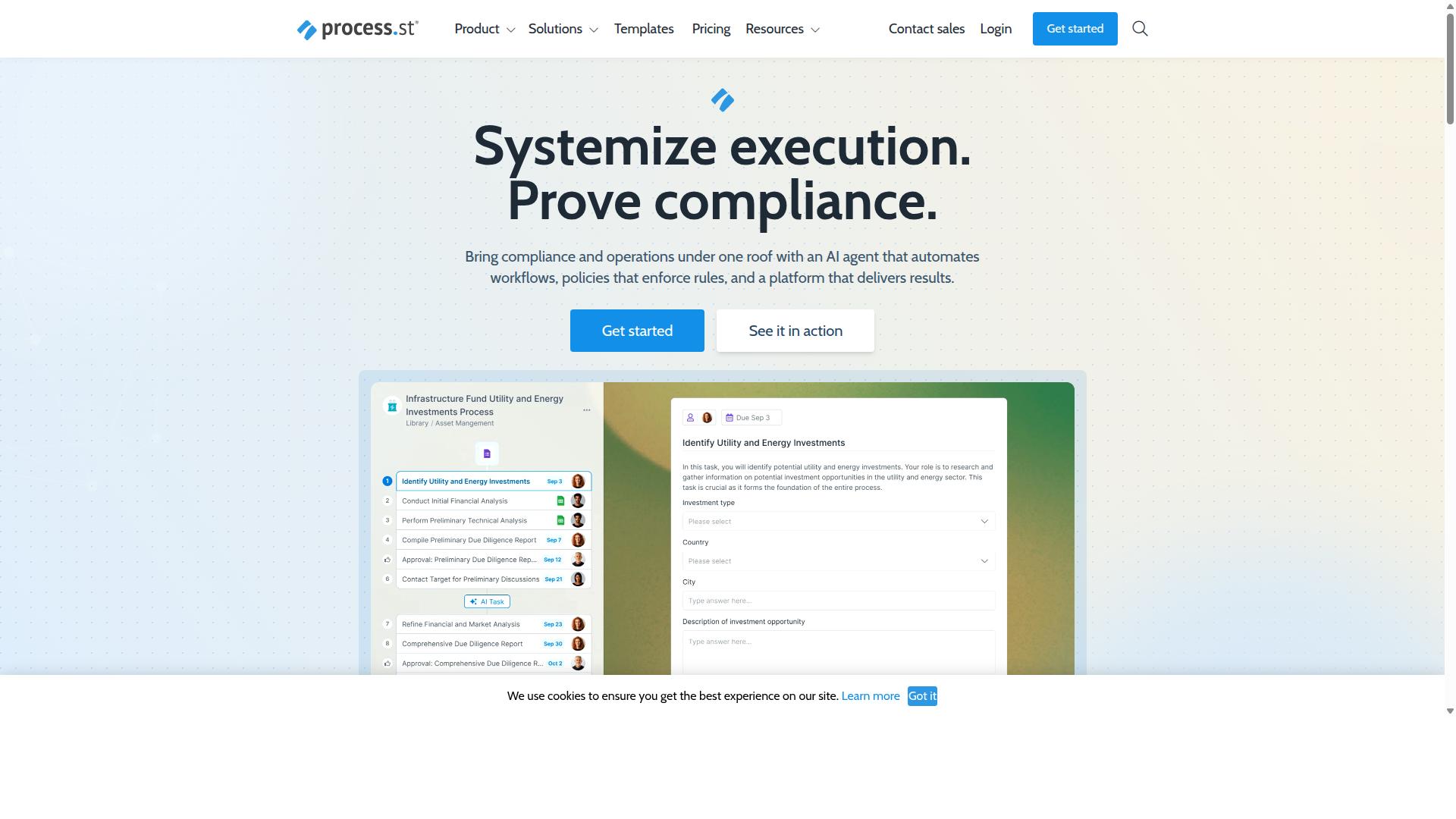
Process Street is a compliance operations platform that automates business processes and enforces policies while producing audit-ready proof.
The platform serves organizations across industries through three distinct products. Docs handles document management and policy control. Ops manages workflow automation and process orchestration. Cora acts as an AI compliance and risk agent that converts policies into workflows automatically.
Research suggests these tools help companies standardize their operations while maintaining regulatory compliance. Experts recommend compliance platforms when organizations need clear audit trails and consistent process execution across teams.
The platform supports over 3,000 companies and more than one million users worldwide. Many organizations use these capabilities for low-code development projects where citizen developers build workflows without traditional coding requirements.
What Is Appian?
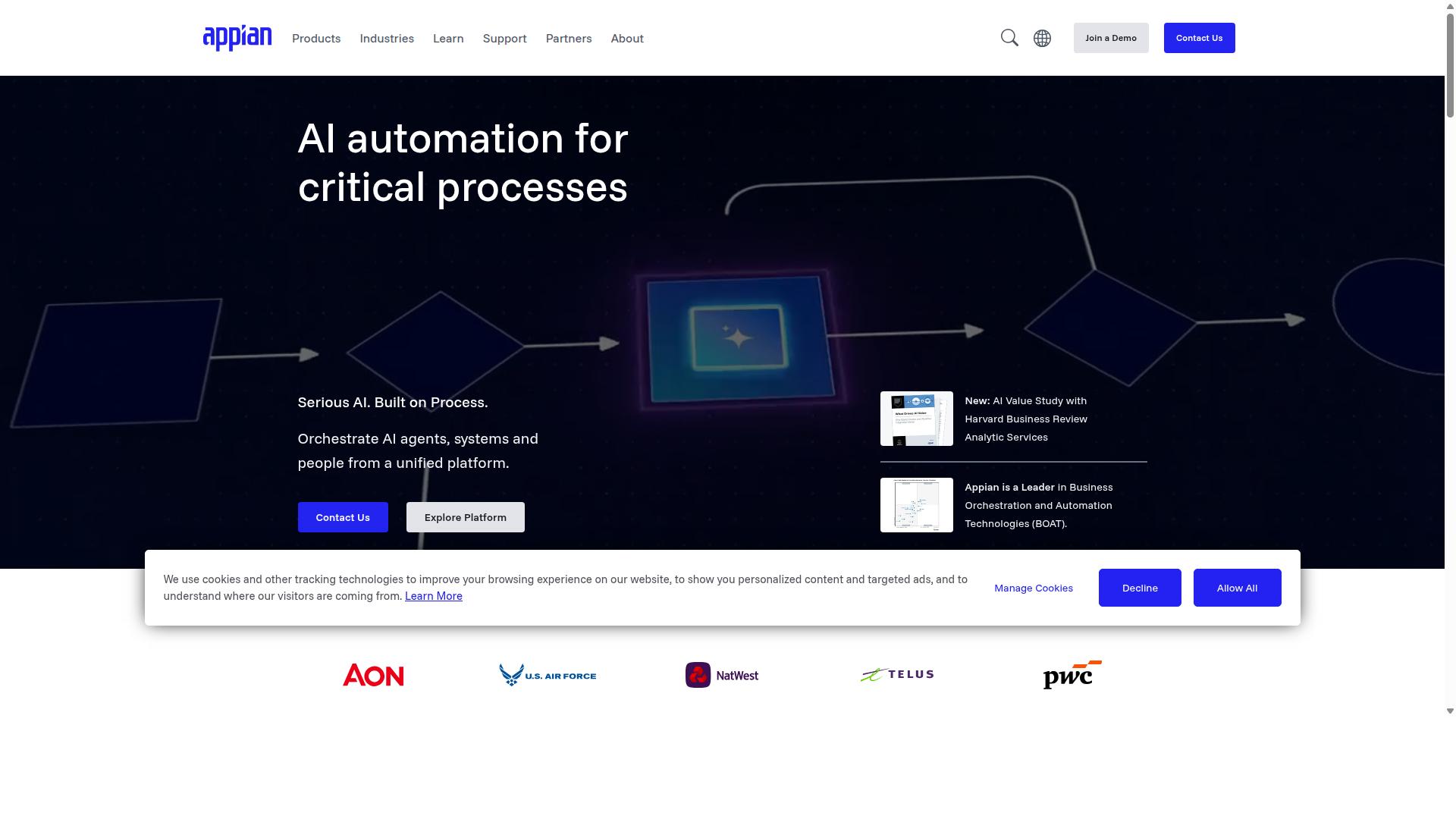
Appian is a general-purpose low-code BPM platform that combines visual process modeling, RPA, and case management into a single enterprise suite.
The platform targets citizen developers who need to build applications without deep coding skills. Its drag-and-drop visual designer lets users arrange workflow steps on screen and connect them to data sources.
Appian supports broad integration capabilities through APIs and connectors. Organizations can link the system to existing databases, enterprise applications, and cloud services.
The tool also includes business rules engines and reporting features. These elements help teams manage complex approval workflows and maintain audit trails.
Enterprise customers typically use Appian for large-scale process automation projects. The platform handles security requirements and compliance standards common in regulated industries.
Features Compared
The section breaks down three critical capability areas where Process Street and Appian take markedly different approaches.
Process Street builds its capabilities around process orchestration, policy enforcement, and AI monitoring. Appian takes a more general low-code approach with broad BPM tools. This creates clear differences in how each platform handles specific business needs.
Workflow Automation & Orchestration
Process Street converts policies into executable workflows via Ops, while Appian relies on low-code BPM orchestration and RPA bots.
Process Street's Ops module turns documented policies into AI-powered workflows that citizen developers can build and modify. The platform uses process orchestration to connect tasks, approvals, and conditional logic without requiring extensive coding skills.
Appian offers general low-code development with BPM orchestration and RPA capabilities. Their approach focuses on broader application development rather than policy-to-workflow conversion. This creates different implementation paths for teams.
Process Street embeds workflow automation directly into document management through its native integrations. Zapier, Microsoft Power Automate, Tray.io, Make, and public API access extend these capabilities across existing business systems.
Compliance & Policy Control
Process Street's Docs module embeds ISO 9001, SOC 2, SOX, and FDA controls directly into policies and document workflows.
Docs enforces governance through built-in audit trails and policy control mechanisms. The system maintains version control for regulatory standards while providing role-based access to sensitive documents. Teams can embed compliance requirements into daily operations rather than treating them as separate processes.
Appian provides compliance features through its general low-code platform. These capabilities exist within their broader BPM framework but lack the specific regulatory framework integration that Process Street offers. The approach requires more customization to achieve similar governance outcomes.
Process Street's approach reduces the gap between documented policies and actual execution. Organizations can maintain compliance standards while giving citizen developers the tools to create compliant workflows from the start.
AI-Powered Monitoring
Process Street adds AI-driven monitoring on top of its workflow engine to surface policy deviations and bottlenecks in real time.
Cora functions as an AI compliance agent that monitors regulations, automates work, and flags risks. The system tracks policy-to-workflow performance through Process AI and Analytics features. Teams receive immediate alerts when processes deviate from established standards.
Appian includes general analytics capabilities within its low-code platform. These tools provide reporting and monitoring functions but operate at a broader application level rather than focusing on policy compliance tracking.
Process Street's AI monitoring creates continuous oversight of both workflow performance and regulatory adherence. This dual focus helps organizations maintain compliance while optimizing operational efficiency across their documented processes.
Pricing Compared
Process Street offers three transparent tiers, Startup, Pro, and Enterprise, while Appian uses custom enterprise licensing.
The Startup plan provides a simplified option for smaller teams. This tier includes unlimited workflows and tasks, up to 5,000 Data Set records, 5 users, 10 guests, 10 automation apps, and 100 automation actions per month with a public API limit of 50 calls monthly.
The Pro plan expands capacity for growing organizations. Teams get unlimited workflows and tasks, up to 10,000 Data Set records, custom user counts, access to all automation apps, and flexible automation actions and API call limits based on their needs.
The Enterprise plan serves organizations requiring advanced capabilities. This tier offers custom Data Set records, unlimited public API access, a dedicated Success Manager, priority support, fully-managed workflows, custom integrations, bulk document import, process consulting, health audits, and personalized team training.
Appian pricing follows typical enterprise software patterns with custom licensing agreements. Organizations must contact sales teams for quotes that depend on user numbers, deployment scope, and specific feature requirements.
Process Street transparency allows teams to understand exact costs upfront. The published limits on each tier help organizations plan budgets without lengthy sales negotiations or unpredictable pricing structures.
Who Should Choose Process Street
Teams that need fast policy enforcement, audit trails, and global data residency options should choose Process Street.
Operations teams often rely on Process Street to manage quality tracking and document control across distributed locations. These teams gain clear visibility into daily tasks without requiring deep technical skills from every user.
Compliance departments use the platform to maintain ISO compliance workflows and keep detailed records of every change. The built-in audit trail feature supports regulatory reviews and reduces manual reporting time.
Human resources departments standardize employee onboarding through reusable templates. This approach ensures consistent processes while allowing quick updates when company policies evolve.
Finance teams handle client onboarding and approval workflows through structured checklists. The platform supports role-based access, which keeps sensitive financial data visible only to authorized personnel.
IT and security groups implement custom workflows that align with internal security policies. Process Street integrates with existing tools through API connections and supports SSO for centralized user management.
Financial services organizations rely on Process Street for compliance documentation and client management processes. Healthcare providers use the platform to track quality metrics and maintain regulatory records.
Manufacturing companies apply Process Street to quality tracking and document control across production sites. Professional services firms use it to standardize client onboarding and maintain consistent service delivery.
Process Street provides a low-code environment that supports citizen developers. Users can build and modify processes through a visual designer without writing extensive code.
The platform emphasizes workflow automation over complex BPM modeling. This focus makes it suitable for teams that need quick deployment rather than extensive system customization.
Who Should Choose Appian
Organizations seeking broad, low-code application development across multiple business domains may prefer Appian. The platform supports creation of custom apps that handle complex business requirements. Teams gain access to extensive visual designer tools and process modeling capabilities.
Citizen developers benefit from Appian when they need to build applications that span different departments. The platform provides drag-and-drop interfaces that reduce the need for traditional coding skills. Business users can create solutions without relying on IT departments for every change.
Large-scale custom applications often require the kind of extensibility that Appian offers. Organizations can integrate multiple data sources through API connections and maintain security standards across different user groups. The platform supports cloud deployment options that scale with business growth.
Companies with strict compliance requirements sometimes select Appian for its built-in security features. The platform includes role-based access controls and audit capabilities that meet regulatory standards. These features become important when handling sensitive data across different business units.
Appian works well for organizations that need to develop applications beyond simple workflow automation. The platform supports business rules engines and reporting tools that handle complex decision logic. Teams can create mobile access points for users who work outside traditional office environments.
Final Verdict
Process Street is the better fit when compliance, rapid setup, and audit-ready documentation are non-negotiable.
Teams that need SOC 2 Type II and ISO 27001 certifications gain immediate assurance that data handling meets strict standards. Process Street delivers these certifications as part of its cloud platform.
Documentation time drops significantly with pre-built templates and processes.
Support stays responsive with an average response time of 5 minutes through email and chat channels. Customers report a 98 percent satisfaction rating across support interactions.
Appian may suit organizations that require very large-scale enterprise deployments. Process Street serves teams that prioritize quick implementation and clear audit trails instead.
Access to Process Street is available through AWS Marketplace, direct email, or in-app chat. Sales teams assist with evaluation and implementation questions.